Roma Women’s Testimony from Ukraine at the United Nations Holocaust Memorial Ceremony
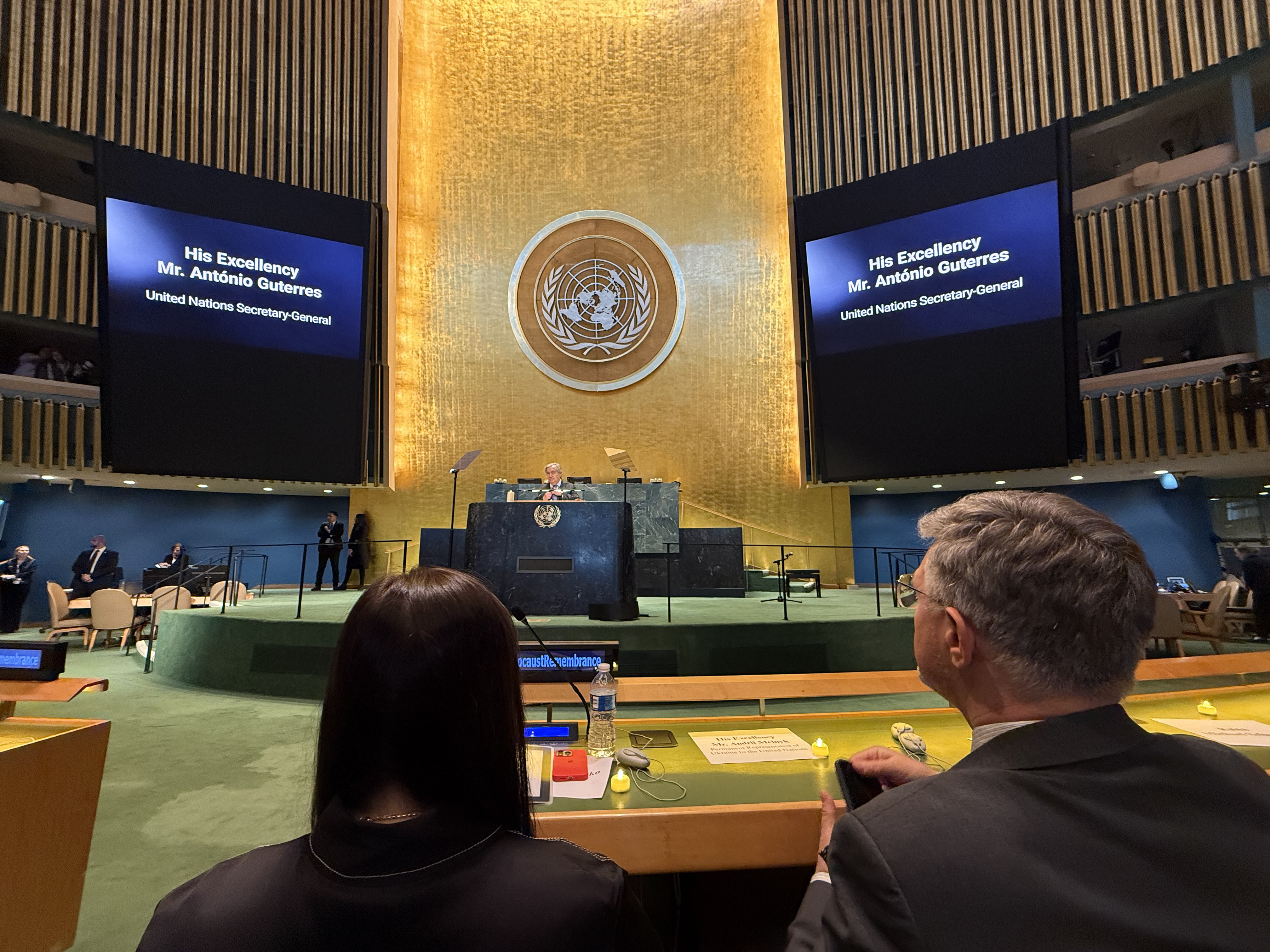
On 27 January 2026, the United Nations General Assembly Hall hosted the official United Nations observance of the International Day of Commemoration in memory of the victims of the Holocaust, held under the theme “Holocaust Remembrance for Dignity and Human Rights.”
At the invitation of the United Nations, Nataliia Tomenko addressed the international community by sharing her own testimony alongside that of her grandmother, Halyna Tomenko, a Roma survivor whose family endured persecution during the Second World War in Nazi-occupied Ukraine.
In the context of the 85th anniversary of the Babyn Yar massacre in 2026, an important commemorative milestone was reached: for the first time, the lived experience of a Roma survivor from Ukraine was formally presented at the United Nations Holocaust Memorial Ceremony. The testimony was conveyed through an intergenerational Roma women’s perspective, emphasizing survival, the transmission of historical memory, and shared responsibility for the future.
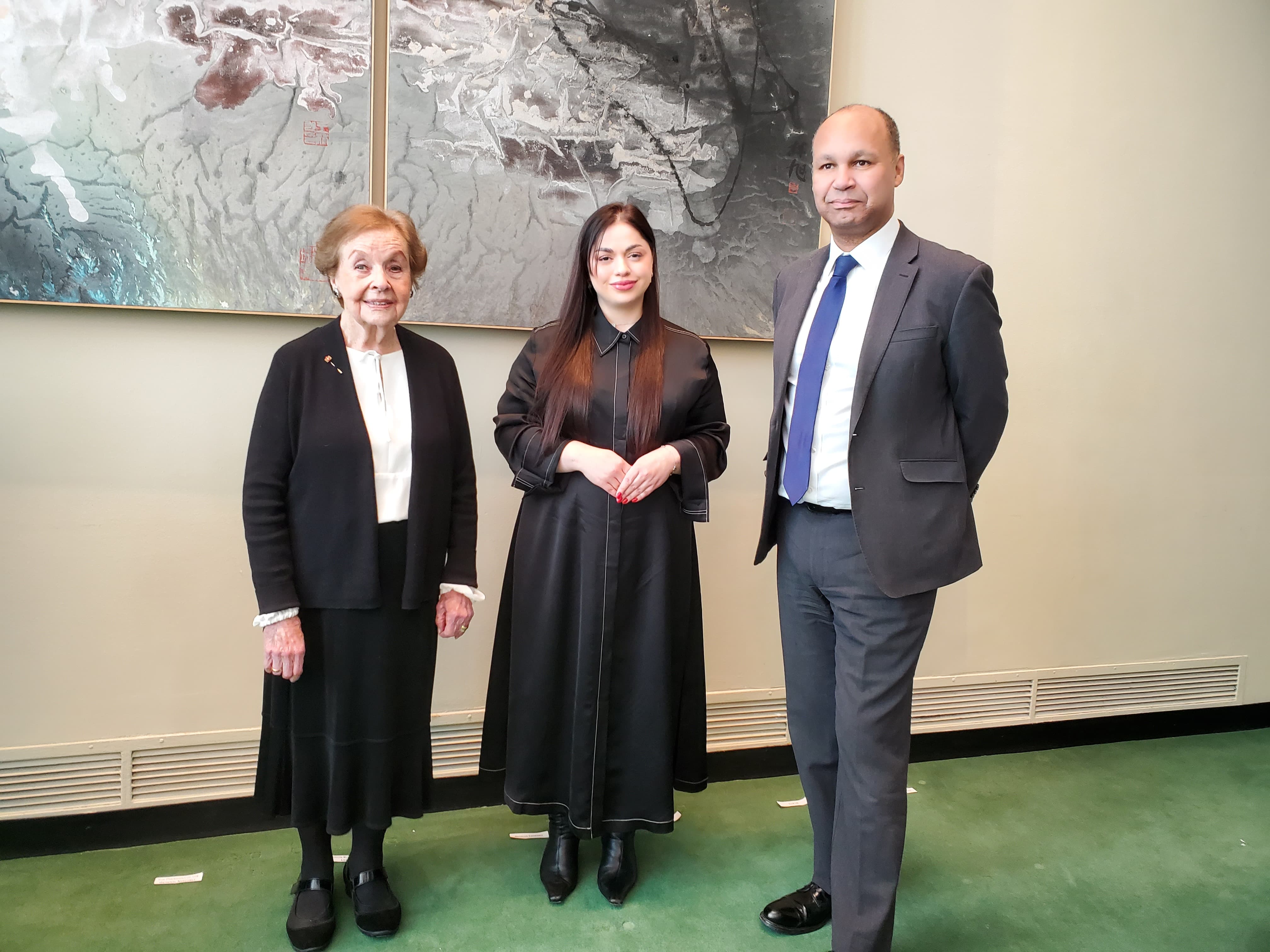
The ceremony featured addresses by the United Nations Secretary-General, the President of the General Assembly, and representatives of the Permanent Missions of Israel and the United States, alongside memorial prayers and survivor testimonies.
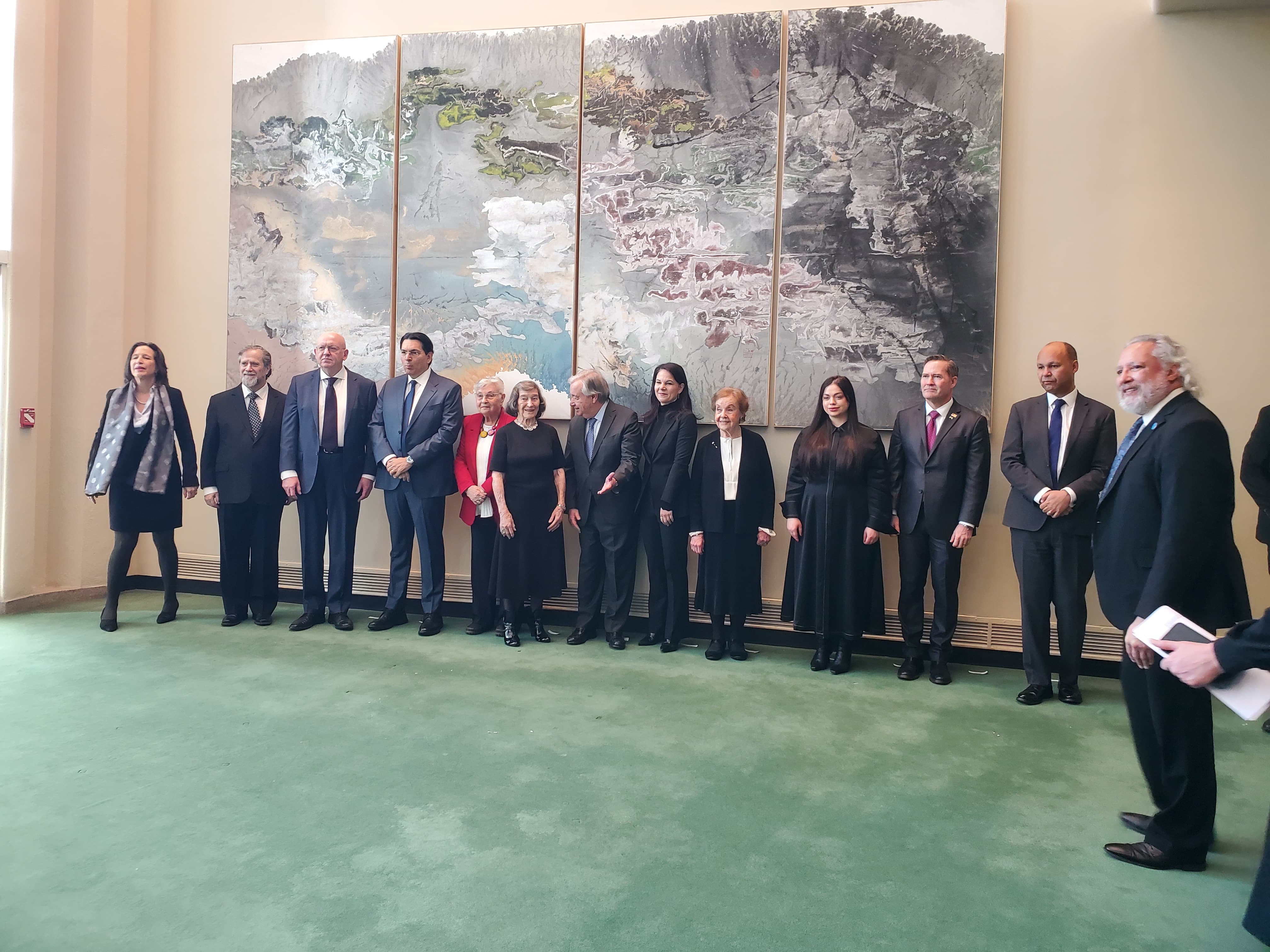
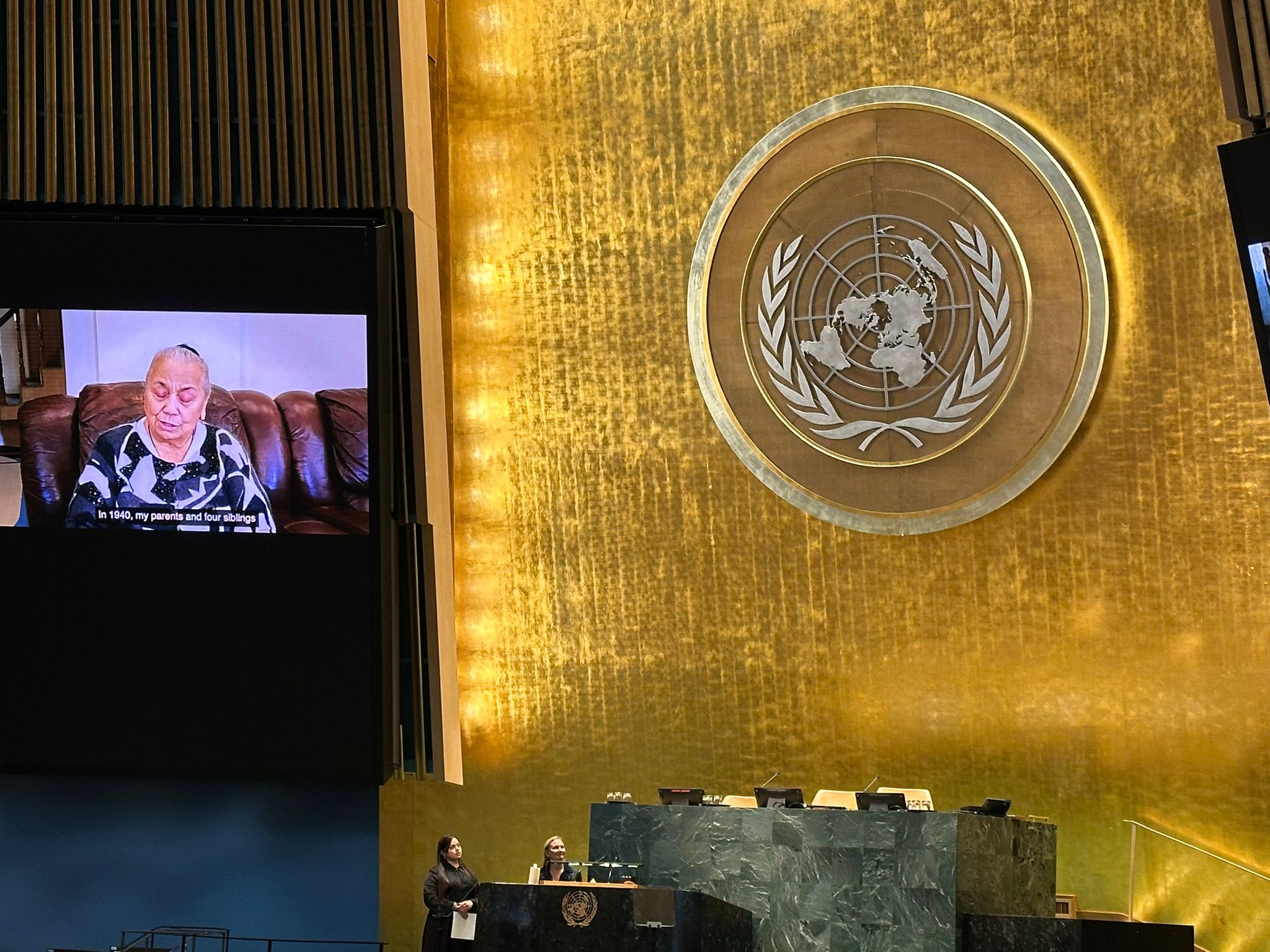
Testimony of Halyna Tomenko
Halyna Tomenko was born on 25 May 1945 in Dnipro, Ukraine, into a Roma family belonging to the Servo subgroup. Although she was born at the end of the Second World War, the war shaped her life long before her birth. Her parents and four older siblings lived in the village of Tsarychanka, where the family worked as farmers. Her father also owned a horse and wagon, providing transportation for local residents.
In 1940, as Nazi racial persecution intensified and Roma families were increasingly targeted, the family was forced to flee Tsarychanka and seek refuge in the larger city of Dnipro in order to survive.
In her testimony at the United Nations, Halyna Tomenko reflected on the enduring impact of persecution on her family and community:
“My life was shaped by war, displacement, and endurance even before my birth. My family endured hunger, genocide, uncertainty, and loss.”
During the Nazi occupation, Roma families lived under constant threat of execution. Survival depended on movement, silence, and fear. Entire Roma families and communities were erased without records or recognition.
Halyna later married a Roma man whose family had also survived Nazi persecution in the Kremenchuk, Poltava region. In their household, memories of the war were never written down or formally acknowledged. Instead, they lived on through physical illness, anxiety, and silence passed from one generation to the next.
“The older generation carried trauma so that the younger generation could live.”
Speaking from present-day Ukraine, Halyna drew a direct connection between the past and the present, as war has once again returned to her country:
“War has returned to Ukraine. Once again, families flee. Trauma does not disappear with time—it is carried forward. But so is strength.”
At the conclusion of her testimony, Halyna symbolically entrusted the responsibility of memory to the next generation:
“My generation has carried memory through survival. Now we entrust this memory to our children and grandchildren—not as fear, but as knowledge, dignity, and protection.”
Her testimony stands as a powerful intergenerational witness to Roma survival, resilience, and the urgent need to safeguard memory in the face of renewed violence.
Testimony of Nataliia Tomenko
Following the testimony of her grandmother, Nataliia Tomenko addressed the United Nations as a representative of the third generation after the Roma genocide, a generation that did not experience genocide directly, yet experience current full-scale Russian invasion in Ukraine and bears responsibility for preserving memory, advancing justice, and safeguarding future generations.
Nataliia Tomenko is a cultural heritage expert, scholar, psychologist-consultant in transactional analysis, visual artist, and Roma human rights defender from Ukraine. She currently serves as Co-Chair of AURA: Ukrainian Roma Advocacy Alliance in Germany and as Deputy Director of ARCA: Agency for the Advocacy of Roma Culture in Ukraine, where she leads projects on memory, oral history, and cultural heritage preservation during wartime.
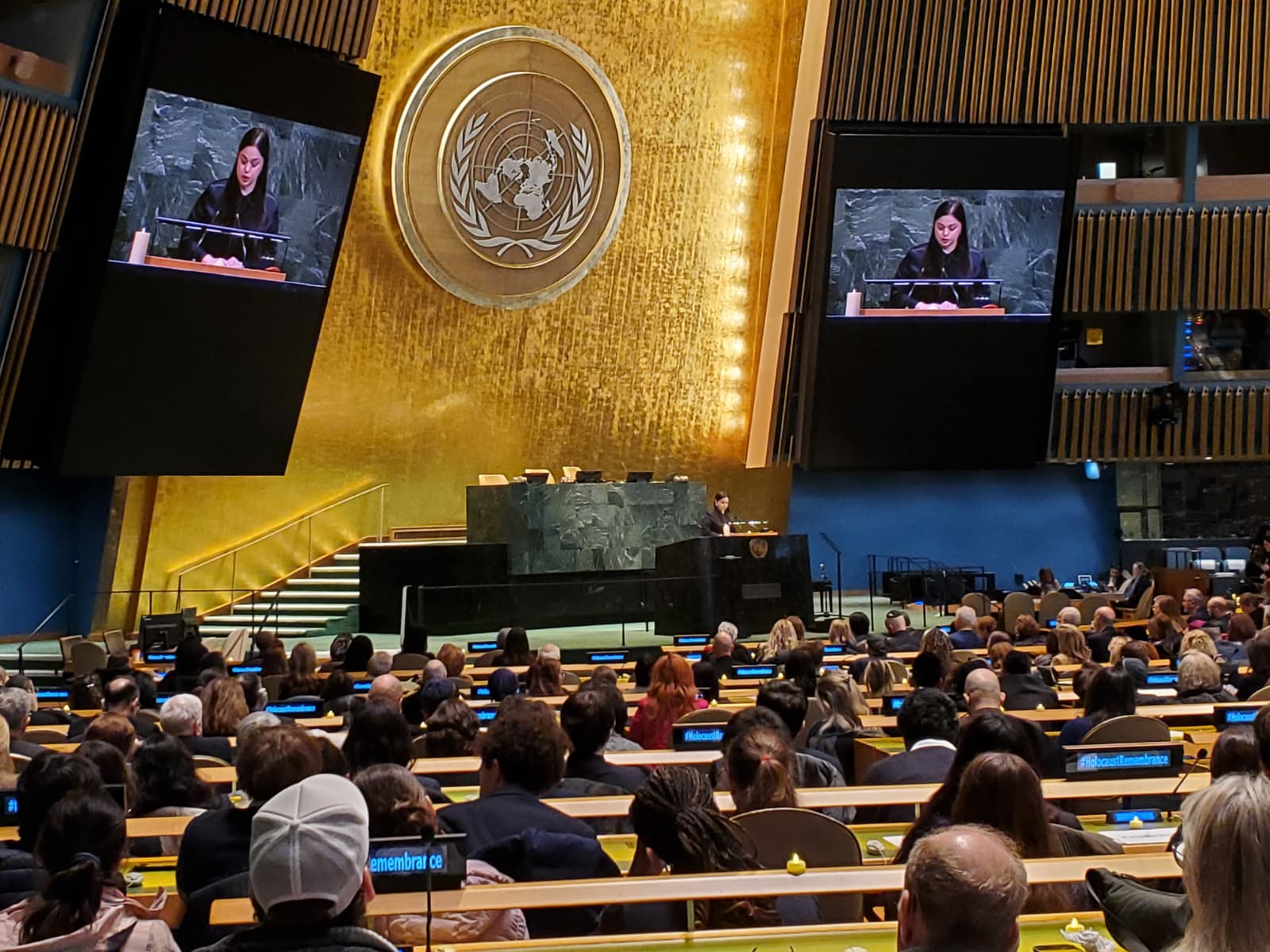
In her address, she emphasized the intergenerational transfer of responsibility:
“I stand before you today as a granddaughter, as a representative of the third generation after the Roma genocide, and as someone who accepts the responsibility entrusted to me.”
Nataliia highlighted that Roma survivors in Ukraine are among the very few living witnesses to two wars on the same land - the Second World War and Russia’s full-scale invasion of Ukraine. Their experiences constitute a unique and irreplaceable body of historical knowledge.
“Roma survivors teach us how to endure uncertainty, how to remain human in inhuman conditions, and how to protect life even when the future is unclear.”
She described the work of Roma civil society organizations in Ukraine, particularly during wartime: documenting survivor testimonies, building secure digital archives, creating exhibitions and educational tools, and providing rapid humanitarian assistance to elderly survivors affected by renewed violence.
“Memory alone is not enough. It must be transformed into protection, education, and solidarity.”
In closing, Nataliia Tomenko addressed the responsibility owed to future generations, linking remembrance directly to human rights and democratic resilience:
“What we do today will determine whether memory remains alive — and whether dignity and human rights are truly protected tomorrow.”
Her testimony affirmed that intergenerational remembrance is not only an act of commemoration, but a form of active responsibility - ensuring that the lessons of the past shape a safer and more just future.
Historical Context: The Roma and Sinti Genocide
During the Second World War, Nazi Germany and its allies carried out the genocide of the Roma and Sinti alongside the Holocaust of the Jewish people. Across Nazi-occupied Europe, an estimated 500,000 Roma and Sinti were murdered as part of a racially motivated campaign of extermination rooted in centuries of antigypsyism. Roma and Sinti were persecuted not for actions or political affiliation, but solely because of their ethnic origin, classified by Nazi racial ideology as “inferior” and therefore expendable. The genocide took multiple forms: deportations, forced labour, starvation, medical experimentation, and mass murder in concentration and extermination camps, including Auschwitz-Birkenau, where the so-called “Gypsy family camp” was liquidated on the night of 2–3 August 1944, when over 4,300 Roma and Sinti were murdered in gas chambers. For decades after the war, this genocide remained marginalised, insufficiently documented, and largely excluded from national and international memory frameworks.
In Ukraine, the genocide of Roma took on a distinct and particularly brutal form, often described by scholars as the “genocide by bullets.” Unlike in Western and Central Europe, where Roma were more frequently deported to camps, Roma in Nazi-occupied Ukrainian territories were predominantly exterminated through mass shootings carried out by German Einsatzgruppen, SS units, Wehrmacht formations, field gendarmerie, and local collaborators. From 1941 onward, Roma communities, both travelling and settled, were rounded up and executed in forests, ravines, fields, and on the outskirts of towns, frequently without any official records or identification of victims. Entire families were murdered at once, leaving few survivors and little documentation. Researchers estimate that between 20,000 and 72,000 Roma were killed on the territory of present-day Ukraine. After the war, Soviet authorities did not recognise Roma as a distinct victim group, subsuming their deaths under the category of “peaceful Soviet citizens,” which contributed to decades of silence and historical erasure. As a result, survivor testimonies, many recorded only in last decades, remain one of the most vital sources for reconstructing this history and restoring dignity, recognition, and justice to Roma victims.
Institutional Contributors
- Agency for the Advocacy of Roma Culture (ARCA)
- Ukrainian Roma Advocacy Alliance (AURA)
- European Roma Institute for Arts and Culture e.V. (ERIAC)
- Foundation “Remembrance, Responsibility and Future” (EVZ)
- Documentation and Cultural Center of German Sinti and Roma
- Information Centre on Antigypsyism (MIA)
- KONTAKTE‑KONTAKTbI e.V.
- The Fortunoff Video Archive for Holocaust Testimonies, Yale University
- Research Centre on Antigypsyism, Heidelberg University
- Ukrainian Center for Holocaust Studies (UCHS)
- National Historical and Memorial Preserve Babyn Yar
The work presented is supported and developed in cooperation with national and international Roma and memory institutions, whose engagement reflects a shared commitment to strengthening Roma representation, combating antigypsyism, and ensuring that Roma voices are present in global memory and human rights spaces. These partners are jointly engaged in safeguarding the oral history of the Roma genocide in Ukraine through testimony collection, education, and long-term memory preservation, contributing expertise in research, archival practice, commemoration, and public education.
See also
- АРКА представила Україну на міжнародній платформі Café Kyiv 2026
- АРКА візьме участь у Cafe Kyiv 2026
- Roma rights and the challenges of war: results of a discussion in Berlin
- Roma Inclusion in Focus – Strengthening Partnerships Between Ukraine and Germany
- The film “Named Voices” was presented at an international conference
- ARСA representative participates in OSCE conference on human rights
- Babyn Yar: And the Thousands of Ravines of Memory. How We Reflect on the Past During Wartime
- Voices of Memory and Future: ARCA’s Participation in the 5-Year Anniversary of the Program
- ARCA Representatives Hold Lecture at the MFA to Mark Roma Genocide Remembrance Day
- Roma Programme Featured at One of Europe’s Largest Conferences
- In New York City, the 69th session of the UN Commission on the Status of Women is underway
- A screening of a movie about the Roma Genocide took place in Berlin
- Michael Roth: “Roma are the largest ethnic community. And its contribution should be recognized”
- Humanitarian Aid, Human Rights, Equality: Challenges faced by the Roma Community
- Participation in the panel discussion “Challenges Faced by Ukrainian Roma in the Ukraine”
- Attitude towards minorities is an important indicator of Ukraine's readiness to accede to the EU
- A networking meeting between civil society participants
- We are already planning the restoration of Ukraine: an international conference has begun
- Participation in DEZIM CONFERENCE 2024
- The Art of Memory: How the Romani Tragedy Resurrects from Oblivion
- The Forum dedicated to the 140th Anniversary of the Female Movement in Ukraine
- "Romanis must be included in the processes of Ukraine’s Reconstruction", – Volodymyr Yakovenko
- The event "Roma contribution to the Recovery of Ukraine"
- The Council of Europe Dialogue with Roma and Traveler civil society
- Conference on Ukraine's recovery in Berlin
- Educational event "Roma in Ukraine - fighters for democracy, human rights and justice" was held
- Ukrainian Decolonization: the Untold Roma Stories
- Public event "Roma in Ukraine – Fighters for Democracy, Human Rights and Justice"
- Mapping the Challenges faced by Ukrainian Roma in a War Time and Overcoming the Obstacles
- Cafe Kyiv event took place in Berlin
- Respect, Recognition and Rights of National Minorities in Ukraine
- Consultation meeting on opportunities for Roma youth realization
- Meeting with a member of the Bundestag
- Conference “Roma as an integral part of Ukrainian society”
- Forum of Roma civil society
- "The Russian War Against Ukraine and Its Consequences for Roma" conference
- First day of Roma Civil Society Forum
- The Sastipe project
- The project Through my mind
- DIKH HE NA BISTER - Roma Genocide Remembrance Initiative